
Ask ten people how much a trip to Egypt costs and you’ll get eleven answers, one of which will involve a cousin who “did it for next to nothing” and slept in a very questionable hostel. The honest reply is: it depends. But “it depends” is a rubbish answer when you’re trying to book a holiday, so let’s do better.
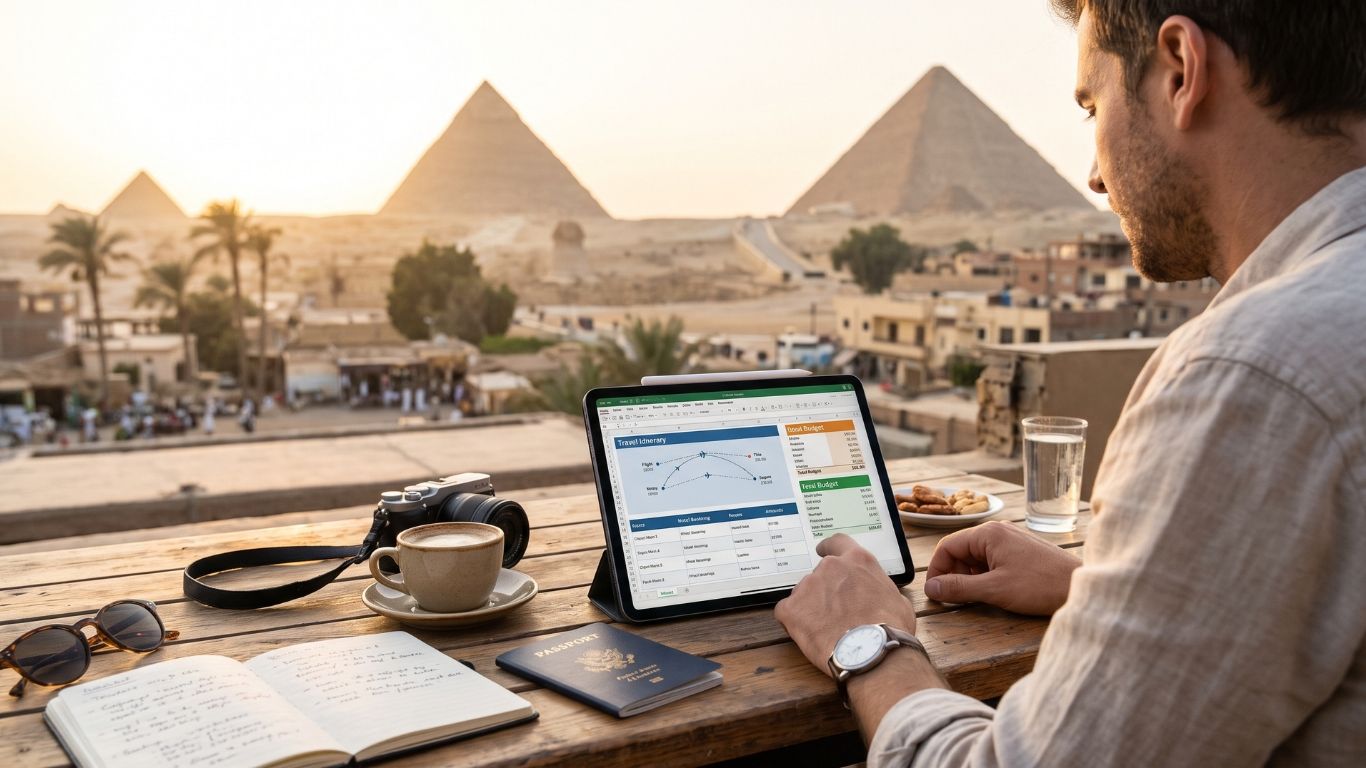
This guide walks you through every part of an Egyptian holiday budget, from flights and hotels to the Nile cruise, the visa and the tip you’ll be handing over to a very enthusiastic camel owner. By the end you’ll know where the money goes, what’s worth spending on, and where you can quietly save.
The short answer: what does a trip to Egypt cost?
Egypt has a reputation for being cheap, and it’s partly deserved. Day-to-day costs on the ground, such as meals, taxis and local transport, are generally lower than in most of Western Europe. But the big-ticket items (flights, hotels, internal travel and a Nile cruise) behave much like they do anywhere else, and they make up most of your bill.
To give you a real-world anchor, the Egypt packages currently listed on our site run from €549 to €1,249. That spread isn’t random: it reflects trip length, hotel category, whether a Nile cruise is included and how much is covered in the price. Think of it as a menu, and your budget decides which dish you order.
Prices also move with the seasons. If you’re still deciding when to go, our guide to the best time to visit Egypt will help you work out when the weather and the crowds are kindest to your wallet.
Package or independent: what you actually pay for
The first decision shapes the whole budget. A package bundles the things that are fiddly and easy to overspend on, while travelling independently gives you flexibility and a lot more admin.
What a package usually covers
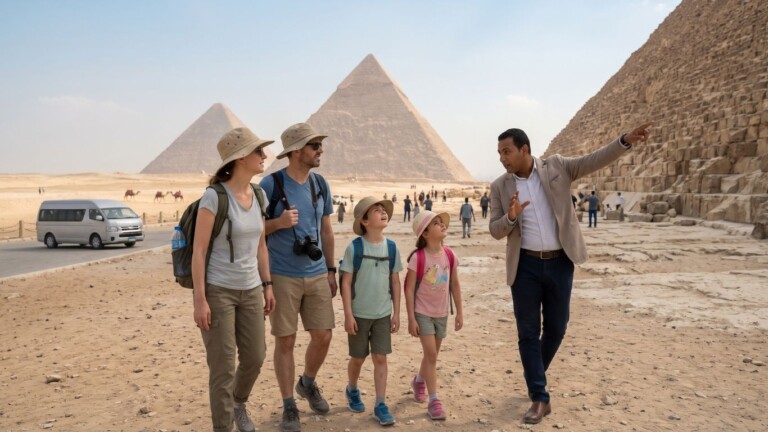
A typical organised trip includes accommodation, a private guide, transfers between cities, entrance fees to the main sights and some or all meals. Browse our Egypt tours and you’ll see exactly what’s included in each, which makes comparing prices much easier than piecing together a dozen separate bookings.
What it usually doesn’t cover: international flights (unless stated), your visa, drinks, tips and anything you buy in the souks. Which brings us to the extras.
What independent travel adds up to
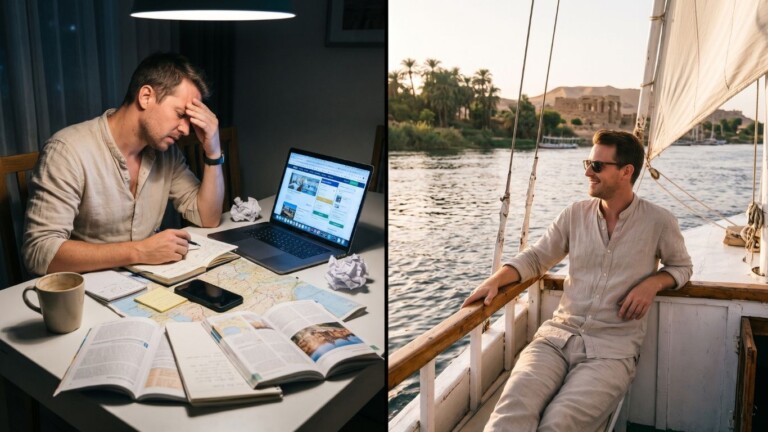
Going it alone can be cheaper on paper, particularly if you’re happy with simple hotels and public transport. In practice, many travellers find that private drivers, guides for the temples, entrance tickets and the odd “special price just for you” quickly erase the saving. Time is also a cost. Working out how to get from Luxor to Aswan with a suitcase and a limited Arabic vocabulary is an adventure, but it isn’t free.
The big costs: flights, hotels and the Nile
Flights
Flights are the most variable line in the budget. Fares depend on where you fly from, how far ahead you book and whether you travel in peak season, when prices climb around Christmas and the cooler winter months. Book early, stay flexible with dates, and check midweek departures. A saving of a few days on either side of a school holiday can be worth far more than any clever hotel deal.
Accommodation
Egypt’s accommodation range is huge. You can sleep in a simple guesthouse near the pyramids or in a five-star hotel with a view of them, and the difference in price is, well, pyramidal. Mid-range hotels with a pool and breakfast are the sweet spot for most visitors, especially after a day of walking through temples in the heat.
Nile cruise or land tour
A Nile cruise is the classic way to see Luxor, Edfu, Kom Ombo and Aswan, and a clever one: your hotel, meals and transport travel with you, so there are fewer surprises on the bill. Cruise prices vary by boat, from comfortable mid-range vessels to ultra-luxury ships, and by the number of nights. Have a look at our Nile cruises to compare, or start with a shorter option such as the 7 Days Cairo and Nile Cruise.
If you’d rather stay on dry land, a land-based itinerary with hotels in Cairo, Luxor and Aswan plus internal transfers can be good value, though you’ll want to compare the totals rather than just the nightly rate.
The smaller costs that add up
Visa
Most European travellers need a visa. According to GOV.UK’s entry requirements for Egypt, the visa on arrival costs 30 US dollars in cash, and from 1 August 2026 Cairo International Airport also offers a digital visa on arrival for 36 US dollars, including a service fee. You can also apply online through the official Egyptian eVisa portal, where the fee is shown before you pay. Either way, it’s a small line in the budget, as long as you avoid third-party agents who charge more than the official price.
Entrance fees
Egypt’s sights are priced separately, and foreign visitors pay more than locals. The pyramids, the Valley of the Kings, Karnak, Abu Simbel and the Grand Egyptian Museum all have their own tickets, and some extras, such as entering a pyramid or a particular tomb, cost on top. Prices are set by the authorities and do change, so check current rates on the official Egypt tourism website before you fix your sightseeing list. On our packages, the main entrance fees are normally included, which is one reason the headline price looks higher than a DIY estimate.
Food and drink
Here is where Egypt really is kind to your wallet. Street food such as koshari, falafel and freshly made bread is delicious and inexpensive, while a sit-down meal in a local restaurant usually costs far less than a comparable one at home. Hotel and cruise-ship restaurants, and anywhere with a view of a monument, charge more. Bottled water is a constant, small expense, so buy it in shops rather than at the tourist spots.
Tipping
Tipping, known locally as baksheesh, is part of everyday life in Egypt. Guides, drivers, hotel staff, cruise crews and the man who points at the toilet all expect something small. Carry plenty of small notes and treat it as a regular budget line rather than a surprise. Many travellers set aside a fixed daily amount for it, and your guide will happily tell you what’s customary on each leg of the trip.
Three ways to budget your trip
Rather than quoting figures that will be out of date by the time the kettle boils, here is how the three main travel styles tend to look.
The savvy saver
Shorter trip, simple three-star hotels, a land tour in the cooler months and street food at lunch. You’ll see the headline sights (the pyramids, Luxor and Aswan) without feeling you’ve missed out. Our shorter packages near the bottom of the price range suit this style well.
The comfortable explorer
Four- or five-star hotels, a Nile cruise, a private guide and one or two special experiences such as a hot-air balloon or a felucca at sunset. This is the sweet spot for most of our travellers, and it’s where something like our 12 Days Egypt Tour Package makes sense.
The luxury traveller
Top-tier cruise boats, a dahabiya sailing along the river, private transfers and rooms with a view. If this is you, take a look at the 11 Days Luxury Egypt Tour with Dahabiya Cruise. It costs more, but the experience is genuinely different.
Smart ways to save money in Egypt
You don’t have to travel on a shoestring to be sensible. These habits keep a budget healthy without ruining the holiday:
- Travel outside the busiest weeks. Christmas and the main winter peak cost the most, so shoulder months often offer the best value.
- Book flights and the main trip early, when more rooms and cabins are still available at lower rates.
- Choose an all-inclusive-style package so entrance fees, transfers and guides are fixed from the start.
- Eat where locals eat and keep the fancy dinners for one or two special evenings.
- Agree the price before any ride, felucca trip or camel photo. Haggling is a sport here, and you get better with practice.
Hidden costs people forget
Every budget has a gap where the unexpected lives. In Egypt it’s usually the small things: optional excursions that are not in the package, camera fees at some sites, bank charges for withdrawing cash abroad, travel insurance and the souvenirs you swore you wouldn’t buy. Our guide to planning with a travel expert is the easiest way to see what your specific trip includes. Build in a cushion of around ten per cent and the surprises won’t hurt.
Frequently asked questions
Is Egypt an expensive country to visit?
Not compared with most European destinations. Daily costs for food, local transport and shopping are generally low, though flights, hotels and cruises are priced like they are everywhere else.
How many days do I need in Egypt?
Seven days covers Cairo and a short Nile cruise, while ten to twelve days lets you add Alexandria, a longer cruise or a few days by the Red Sea. A longer trip costs more in total but usually less per day.
Are flights included in your Egypt packages?
It depends on the package. Check the inclusions on each tour page, or ask us and we’ll tell you exactly what you’re paying for.
Should I pay in cash or by card?
Both. Cards work in hotels and bigger shops, but cash is king for tips, markets, taxis and the visa on arrival, so carry small notes.
Every budget is a bit different, and the best number is the one built around you. Tell us your dates, your travel style and how much you’d like to spend, and we’ll put together a tailor-made trip to Egypt with no hidden extras. Or just get in touch for a clear, honest quote.