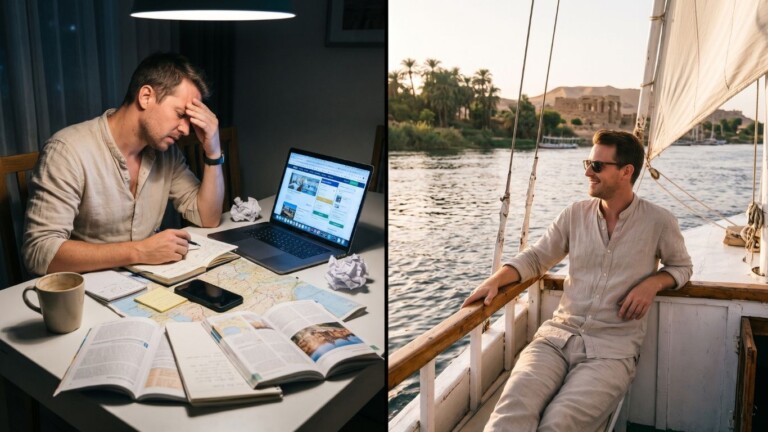

Here is the question that quietly splits Egypt-bound couples, families and friends into two camps: do we float down the Nile in a hotel that moves, or do we drive from site to site and sleep in a different bed every few nights? Both camps are certain they are right. Both camps are, frankly, a little bit smug about it.
The truth is that neither option is better in the abstract. A Nile cruise and a land tour are two different ways of seeing the same extraordinary country, and the right one depends on how you like to travel, how much time you have and how much you enjoy unpacking. This guide walks through what each really involves, compares them side by side and helps you decide without needing a spreadsheet and a strong cup of tea.
The Short Answer: It Is Rarely Either/Or
If you want the one-line version, here it is. Choose a Nile cruise if you want to see the temples between Luxor and Aswan with the least possible faff. Choose a land-based tour if you want flexibility, a choice of hotels and a slower pace. Then notice that the best Egypt trips often use both: a few days on land in Cairo and Giza, a flight south, a few nights sailing between Luxor and Aswan, and perhaps a beach finish to recover from all that culture.
That is how many of our itineraries are built. Our 7 Days Cairo and Nile Cruise (3 nights) pairs the capital with the river, and our 12 Days Egypt Tour Package stretches the same idea across more time. So instead of asking which one wins, a better question is how much of each you want.
What a Nile Cruise Actually Looks Like
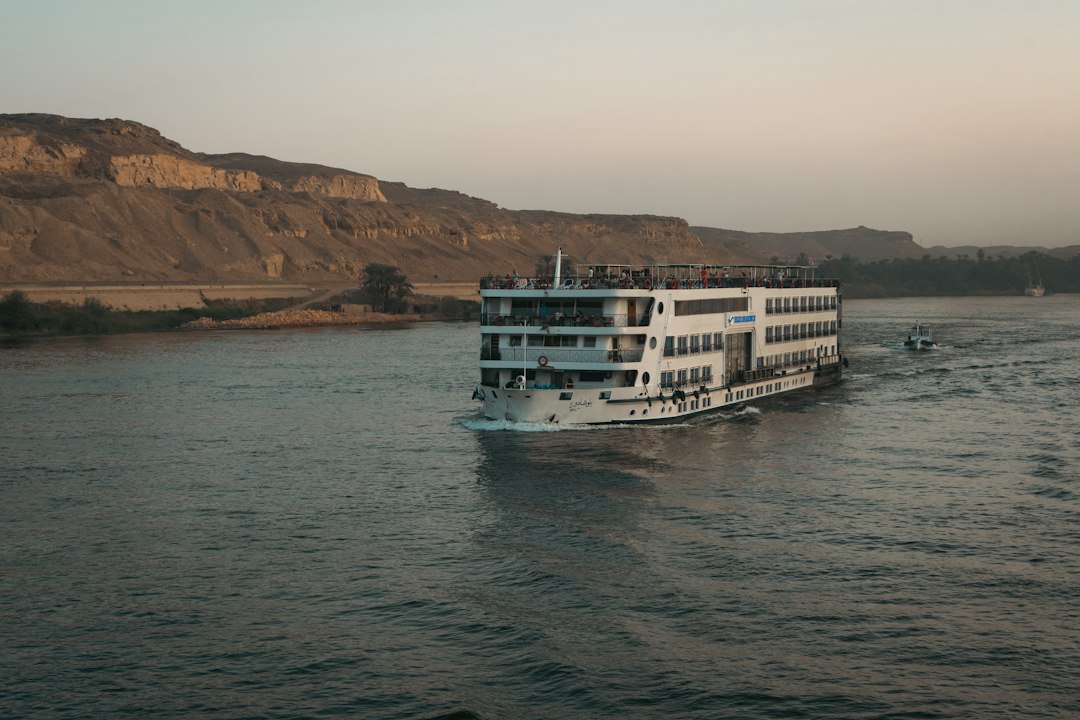
A classic Nile cruise sails between Luxor and Aswan, the stretch of river where many of Egypt’s best-preserved temples sit within easy reach of the bank. The ships are essentially floating hotels: you unpack once, your cabin travels with you and the scenery slides past the window while you eat breakfast. Itineraries usually run for three or four nights, with stops at places such as Esna, Edfu and Kom Ombo along the way.
A Typical Day on Board
Mornings start early, often with a breakfast box or a quick bite before a guided temple visit while the air is still kind. By late morning you are back on board, the ship is moving and lunch appears as if by magic. The afternoon belongs to the sun deck: a drink in hand, palm groves and mud-brick villages drifting past and the occasional enthusiastic child waving from the bank. Another excursion often follows in the late afternoon, then dinner and, depending on the ship, a themed night, some live music or a very optimistic attempt at belly-dancing lessons.
It is a rhythm that suits the climate. Upper Egypt can be properly hot, and a schedule that puts sightseeing in the cooler hours and the pool in the middle of the day is no accident.
Who a Cruise Suits Best
Cruises tend to suit first-time visitors, anyone who dislikes changing hotels, travellers who want one stable base and honeymooners looking for something romantic. They are also ideal if you want the logistics handled for you, because transfers, meals, guides and the daily plan all come as one package. To see what a comfortable modern ship offers, take a look at our Movenpick Royal Lotus Nile Cruise. If you prefer something smaller and more intimate, our 11 Days Luxury Egypt Tour with Dahabiya Cruise trades the big ship for a traditional sailing boat.
What a Land Tour Actually Looks Like
A land tour works the other way round. You base yourself in a city such as Cairo, Luxor or Aswan and travel out each day by car, minibus or train. The hotels change as the route moves on, but you also get proper time in places the river simply does not reach: the pyramids at Giza, the Grand Egyptian Museum, the old streets of Islamic Cairo, Alexandria, the oases and the desert.
Pace and Flexibility
The biggest advantage is that time is yours. If the Valley of the Kings leaves you wanting more, a land tour can stay another morning. If you would rather skip a third temple in a single day and have a long lunch instead, nobody will judge you. You also pass through towns on foot rather than watching them from a deck, which means more chances to wander into a café, a market or a conversation.
The price of that freedom is more packing and unpacking, and more hours in vehicles. Egypt is a big country, and a day on the road is a real day on the road.
Who a Land Tour Suits Best
Land tours are a great fit for travellers who like to wander, repeat visitors who have already ticked off the headline temples and anyone whose real interest is Cairo, Alexandria or the desert. Our 11 Days Egypt Travel Package with Felucca shows how a land-based route can still include a taste of the river.
Nile Cruise vs Land Tour: Head to Head
Let’s put the two side by side on the things travellers actually worry about.
Comfort and Logistics
The cruise wins on simplicity. One cabin, meals on board and no daily check-outs mean you spend your energy on the temples rather than on your suitcase. Land tours ask you to pack more often, but they give you a wider choice of hotels and a bed that stays firmly still, which matters to some people more than they will admit.
Sightseeing Time
This is where the answer depends on how much you want to see. UNESCO’s World Heritage listing for Ancient Thebes with its Necropolis covers the temples of Karnak and Luxor on the east bank and the royal tombs on the west bank, which gives you an idea of how much there is around Luxor alone. A land tour can give Luxor an extra day, while a cruise fits its visits into a set schedule. Further south, the Nubian Monuments from Abu Simbel to Philae are commonly added as excursions from Aswan on either kind of trip.
Cost
Do not expect a simple winner here. Cruises bundle accommodation, meals and transport, so the headline price looks tidy. Land tours can look cheaper on paper, but meals, entrance fees and transfers sometimes sit outside the price. Whichever you pick, compare like with like: what is included, what costs extra and how many sightseeing days you actually get. Our guide to how much a trip to Egypt costs breaks down the usual extras, and our piece on organised trips versus independent travel explains why bundled itineraries often hold up well on value.
Atmosphere
Cruises are social: shared dining rooms, a sun deck and a ready-made cast of fellow passengers, some of whom will become your new best friends and some of whom will steal your sun lounger. Land tours are more private, with smaller groups and more movement. Neither is better. It simply depends on whether you fancy a floating holiday camp or a roaming adventure.
When a Nile Cruise Wins
A cruise is probably your best bet if any of these sound like you:
- You are visiting Egypt for the first time and want the classic temples with as little planning as possible.
- You hate repacking, and the idea of one cabin for several nights makes you happy.
- You want a calm counterweight to busy Cairo, with a deck chair and a view instead of traffic.
- You are travelling with relatives for whom long road days would be tiring, since the ship does the moving for you.
- You are celebrating something, such as a honeymoon or an anniversary, and want it to feel special.
When a Land Tour Wins
A land tour tends to be the better choice if this list is nearer to the mark:
- You want depth rather than a quick tour, with the freedom to linger where something grabs you.
- Your real interests are Cairo, Alexandria, the oases or the desert, none of which the river reaches.
- You simply do not enjoy boats, however gentle the Nile is, and prefer your hotel to be firmly attached to the ground.
- You like choosing your own hotels, restaurants and rhythm of the day.
- You have already seen the main temples and want to explore a different side of Egypt this time.
The Best of Both: Combining a Cruise and a Land Tour
Here is the plan that keeps almost everyone happy. Start with three nights in Cairo, long enough for Giza, the museums and a wander through the old city. Fly or take the overnight train to Luxor, board your ship and sail for three or four nights to Aswan, taking in the temples on the way. Add Abu Simbel and Philae from Aswan if you have the time, then return to Cairo or head for the Red Sea to do absolutely nothing for a few days.
If the idea of the overnight train appeals, our 7 Days Cairo and Nile Cruise by Sleeper Train is built around exactly that. Timing matters too, because the heat in Upper Egypt changes the whole feel of a trip. Our month-by-month guide to the best time to visit Egypt will help you pick your dates before you pick your boat.
Questions Travellers Often Ask
How many nights should a Nile cruise be?
Three or four nights between Luxor and Aswan is the usual length, and it is enough to see the main temples at a comfortable pace. Longer sailings tend to add relaxation and extra stops rather than many more big-name sights, so choose based on how much downtime you want.
Do I need a visa for either option?
Visa rules depend on your passport, not on how you travel. Our Egypt visa guide explains who needs one and how to get it, and the official GOV.UK entry requirements for Egypt are worth checking before you book.
Is a Nile cruise suitable for children?
Many families enjoy it, because a ship gives children a safe, contained space with a pool on deck and a new view every hour. The early starts for temple visits can be hard on little ones, though, so it helps to choose a ship and schedule that suit your family’s rhythm.
Can I check current travel advice before booking?
Yes, and it is a good habit for any destination. The UK government publishes up-to-date foreign travel advice for Egypt, covering safety, health and local laws, and we are always happy to talk you through anything it raises.
Ready to Choose? Let’s Build It Around You
The honest answer to cruise or land tour is that it depends on you, which is exactly why we build trips around travellers rather than the other way round. Tell us your dates, who is coming and how much you like (or loathe) packing, and we will suggest a mix of river and road that fits. Explore our tailor-made trips or simply get in touch, and let’s get you on the Nile.