
Seven days in Egypt sounds like a dare. This is a country with roughly five thousand years of history on show, and you are proposing to see the highlights between one Sunday and the next. The good news is that it can be done, and done well, as long as you accept one rule: you cannot see everything, so you pick the right things and let the rest go. This itinerary covers Cairo, Luxor and Aswan, the classic trio, at a pace a normal human being can survive.
We have built it the way our travellers actually use their week: arrive, hit the pyramids early, fly or take the sleeper train south, spend two proper days in Luxor, finish with the Nile at Aswan. There are no heroic 4am alarms every single morning (only a couple of them, and we will tell you which).
Is 7 days in Egypt enough?
For a first visit, yes. A week lets you tick off the three big pillars of any Egypt trip: the pyramids and museums of Cairo, the temples and tombs of Luxor, and the slower Nile rhythm of Aswan. What a week does not allow is Alexandria, the Red Sea, the oases or the Sinai. If those are on your wishlist, look at a longer route such as our 12-day Egypt tour package, or tell us what you want and we will build it from scratch with our tailor-made trips service.
The honest trade-off is this: seven days means two internal journeys, and each one eats part of a day. Plan for them and they cost you very little. Ignore them and you will spend your holiday in a departure lounge, which is a perfectly nice place but not on anyone’s bucket list.
The route at a glance: Cairo, Luxor, Aswan
Cairo sits at the northern end of the Nile, while Luxor lies about 700 km to the south, according to the UNESCO World Heritage Centre, and Aswan is a little further on again. Doing the trip in that order, north to south, means you finish on the quietest, prettiest stretch of the river. Here is how the week breaks down:
- Days 1 to 3: Cairo and Giza, including the pyramids, Saqqara and the city’s museums and old quarters.
- Days 4 and 5: Luxor, with the West Bank tombs and the great Karnak and Luxor temples, then onwards to Aswan.
- Days 6 and 7: Aswan, Philae Temple, a felucca on the Nile, and the journey home.
Day-by-day itinerary
Day 1: Arrive in Cairo
Most international flights land in Cairo in the afternoon or evening, so treat Day 1 as a gentle landing. Check in, stretch your legs along the Nile corniche, and eat something local: koshari (rice, lentils, pasta and crispy onions, a carb festival in a bowl) is the classic first meal. Resist the urge to schedule anything ambitious. Tomorrow starts early.
Day 2: The pyramids, the Sphinx and Saqqara
This is your first early start, and it is worth it. Be at the Giza plateau soon after it opens, before the heat and the crowds arrive. Walk around the three main pyramids, meet the Great Sphinx, and take your photo with the Great Pyramid without a stranger’s elbow in the frame. Giza is only the best known part of a much bigger landscape: the UNESCO-listed pyramid fields stretch from Giza south to Saqqara and Dahshur and include more than 38 pyramids, as described on the UNESCO page for Memphis and its Necropolis.
After lunch, head to Saqqara to see the Step Pyramid of Djoser, the first pyramid ever built, and the painted tombs nearby. It is the perfect “how did we get from a pile of stones to the Great Pyramid?” lesson, and it is usually far quieter than Giza.
Day 3: Museums, Old Cairo and the journey south
Spend the morning on Cairo’s museums and its older neighbourhoods. The Grand Egyptian Museum is the headline act for ancient Egypt, and Coptic Cairo and the Islamic quarter add a very different layer: churches, mosques, and the carved wooden doors of the old city. If you still have energy, the Khan el-Khalili bazaar is the place to practise your haggling, preferably with a glass of mint tea in hand.
In the evening you travel to Luxor. You have two sensible choices: a short domestic flight, or the overnight sleeper train, which saves a hotel night and is half the fun. Our 7-day Cairo and Nile cruise by sleeper train is built around exactly that idea.
Day 4: Luxor’s West Bank
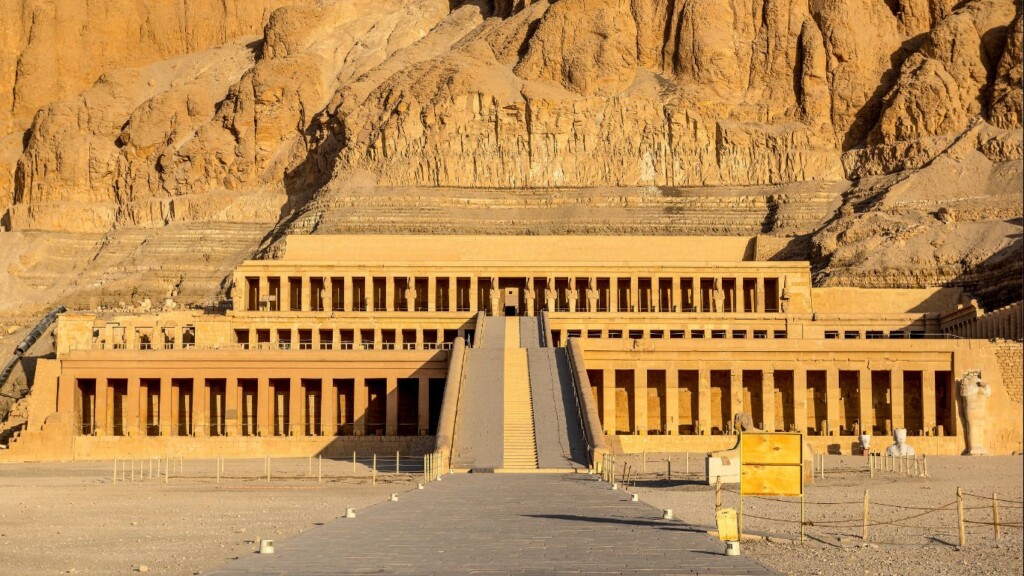
Luxor is often called the world’s greatest open-air museum, and the West Bank is where the pharaohs chose to spend eternity. Start with the Valley of the Kings, where the royal tombs were cut into the rock, then visit the funerary temple of Queen Hatshepsut at Deir el-Bahari, an elegant terraced building that looks strangely modern against the cliffs. UNESCO lists all of this, together with Karnak and Luxor Temple, as Ancient Thebes with its Necropolis, a property of around 7,390 hectares.
Go early, carry water, and wear a hat. Tombs are cool inside but the walk between them is not. Photography rules vary from tomb to tomb, so ask before you click.
Day 5: Karnak, Luxor Temple and on to Aswan
Karnak is not a temple so much as a small city of temples, with a forest of enormous columns that makes everyone, however seasoned, go quiet for a moment. Give it a proper morning. Then pop over to Luxor Temple, which is smaller and manages to be even more atmospheric once the sun starts to drop and the floodlights come on.
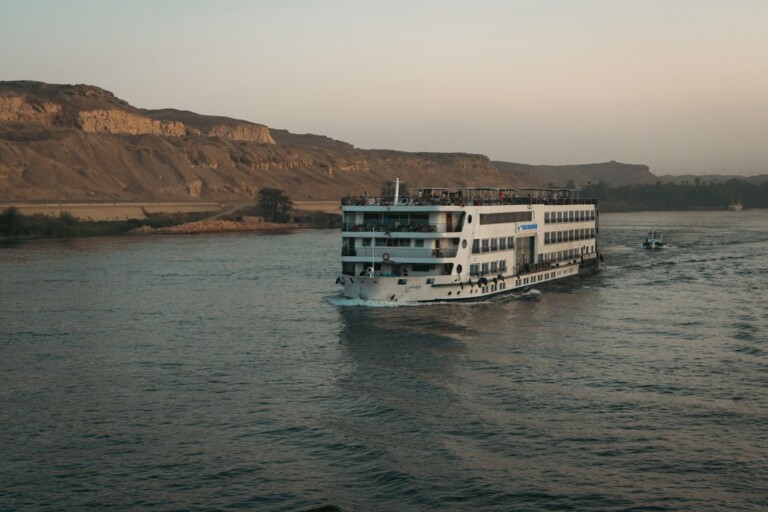
From Luxor you head south to Aswan. Some travellers do it by road, stopping at the temples of Edfu and Kom Ombo along the way. Others board a Nile cruise, which turns the journey itself into the experience. If you are torn between the two, our guide to choosing between a Nile cruise and a land tour will help you decide.
Day 6: Aswan, Philae and the Nile by felucca
Aswan is where Egypt exhales. The pace is slower, the Nile is wider and the light is ridiculous. Visit the Philae Temple on its island, then finish the day on a felucca, the traditional white-sailed boat, drifting around Elephantine Island as the sun goes down. It is the single most relaxing hour of the whole week and nobody will make you climb anything.
If you are desperate to see Abu Simbel, it is possible as a very early day trip from Aswan. It is a long morning, so only add it if the temples are your main reason for coming to Egypt.
Day 7: Fly home from Aswan or Cairo
Take a last stroll through the Aswan souk for spices, hibiscus tea and the obligatory fridge magnet, then head to the airport. Some international flights leave from Cairo, so you may need a domestic hop back north first. Check your flight times early and leave generous margins, because this is not the day to discover that your connection is tighter than your suitcase.
Getting around: flights, trains and the Nile
Egypt is long and thin, and almost everything of interest hugs the river, so the logistics are simpler than they look. There are three realistic ways to move between the big three:
- Domestic flights: the fastest option, and sensible when time is short. Book early in high season, as seats on popular routes fill up.
- The sleeper train: slower, but you wake up in Luxor or Aswan having saved a hotel night. A good fit if you like a bit of adventure.
- A Nile cruise: the leisurely choice, usually between Luxor and Aswan. Our 7-day Cairo and Nile cruise (3 nights) combines the pyramids with a river stretch in a single package.
Whichever you choose, the key is to have the transfers organised in advance, with someone waiting at the other end. That is a big part of what an organised trip is for, and we have written about the maths of it in organised trip versus independent travel.
Best time to go and what to pack
The sweet spot for this route is the cooler half of the year, when you can walk around Luxor’s tombs without feeling like a roast chicken. Summer works too if you plan around the heat, with early starts and long, lazy afternoons. Our month-by-month guide to the best time to visit Egypt goes into the detail.
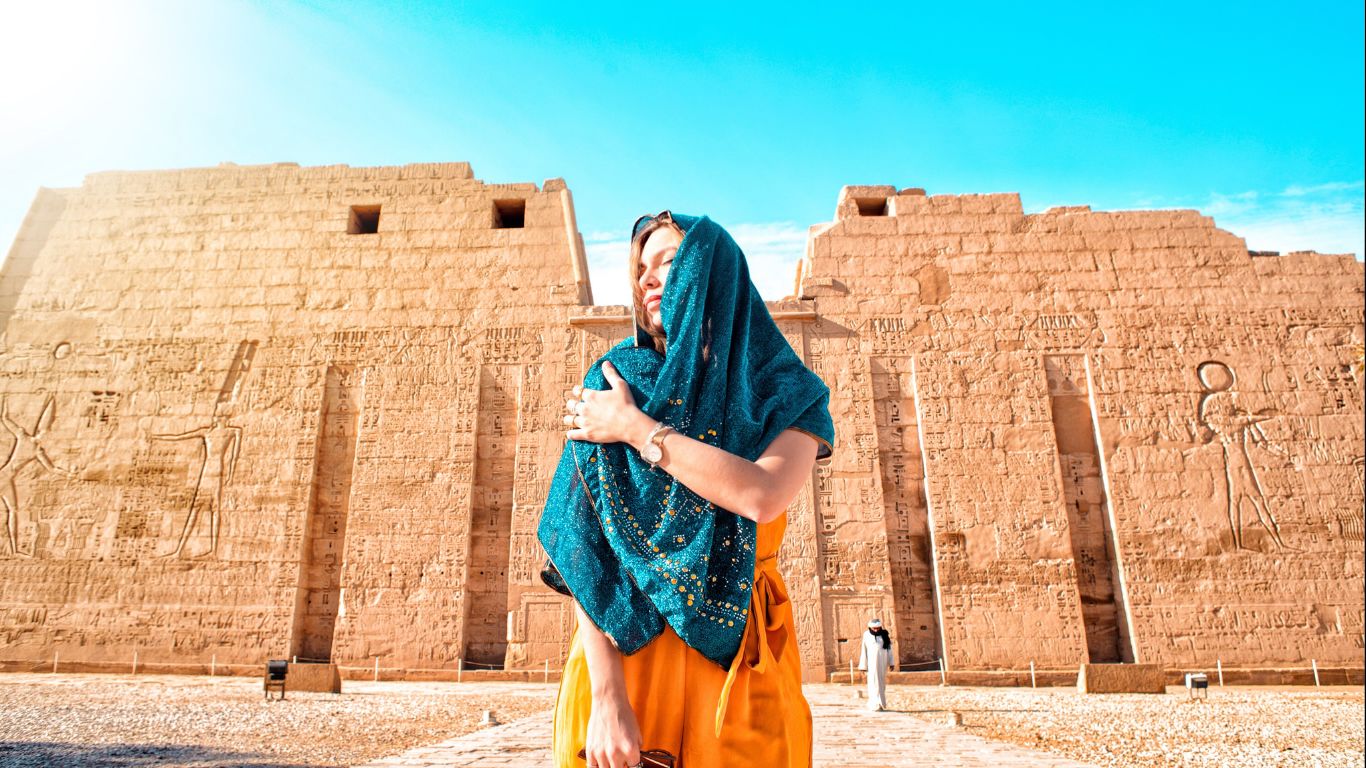
As for the suitcase, think light, breathable layers, a hat, sunglasses, sunscreen and comfortable closed shoes for uneven ground. Shoulders and knees covered is a courteous default at mosques and in smaller towns. A scarf does triple duty: sun shield, mosque cover-up and emergency picnic blanket.
Costs and entry requirements
Budget depends heavily on how you travel, so we have a separate breakdown in how much a trip to Egypt costs. On paperwork, UK travellers need a passport valid for at least six months from the date of arrival, with at least one blank page, and most need a visa. According to the UK government’s Egypt entry requirements, you can apply for an e-visa in advance, or buy one on arrival at approved airports. Rules change, so always check the official page before you fly, and read our Egypt visa guide for the practical steps.
Tips for getting the most out of a week in Egypt
- Start the big sites early. The best light and the smallest crowds are in the first hour after opening.
- Do not stack two heavy days back to back. Alternate a big sightseeing morning with a slow afternoon.
- Carry small notes for tips and drinks. It makes every small interaction smoother.
- Drink more water than feels necessary, and keep a light snack in your bag.
- Travelling with children? Our family guide to Egypt with kids shows how to adapt the pace.
Frequently asked questions
Can I see Egypt’s highlights in 7 days?
Yes, the main highlights fit comfortably: the pyramids, the Valley of the Kings, Karnak and the Nile at Aswan. You will not see everything, but you will see the sites that define the country.
Is it better to fly or take the train between Cairo and Luxor?
Flying is quicker; the sleeper train is more atmospheric and saves a night of accommodation. Choose based on whether you value time or the experience more.
Should I add a Nile cruise to a 7-day trip?
If you want the journey between Luxor and Aswan to double as your hotel and your transport, a cruise is an excellent fit. If you would rather have more time on land, a road route with a couple of stops works well too.
Do I need a guide?
You do not strictly need one, but a good Egyptologist guide turns a pile of stones into a story. On a week-long itinerary where time is tight, having someone handle tickets and queues is a real advantage.
Ready to plan your week in Egypt?
You can follow this itinerary as it stands, or we can reshape it around your dates, your pace and your interests, from a slower Luxor to a private guide at Giza. Take a look at our 7-day Cairo and Nile cruise, or get in touch and tell us what your perfect week in Egypt looks like. We will take care of the rest.